
Complete Guide to U.S. Entry Waivers for Canadians
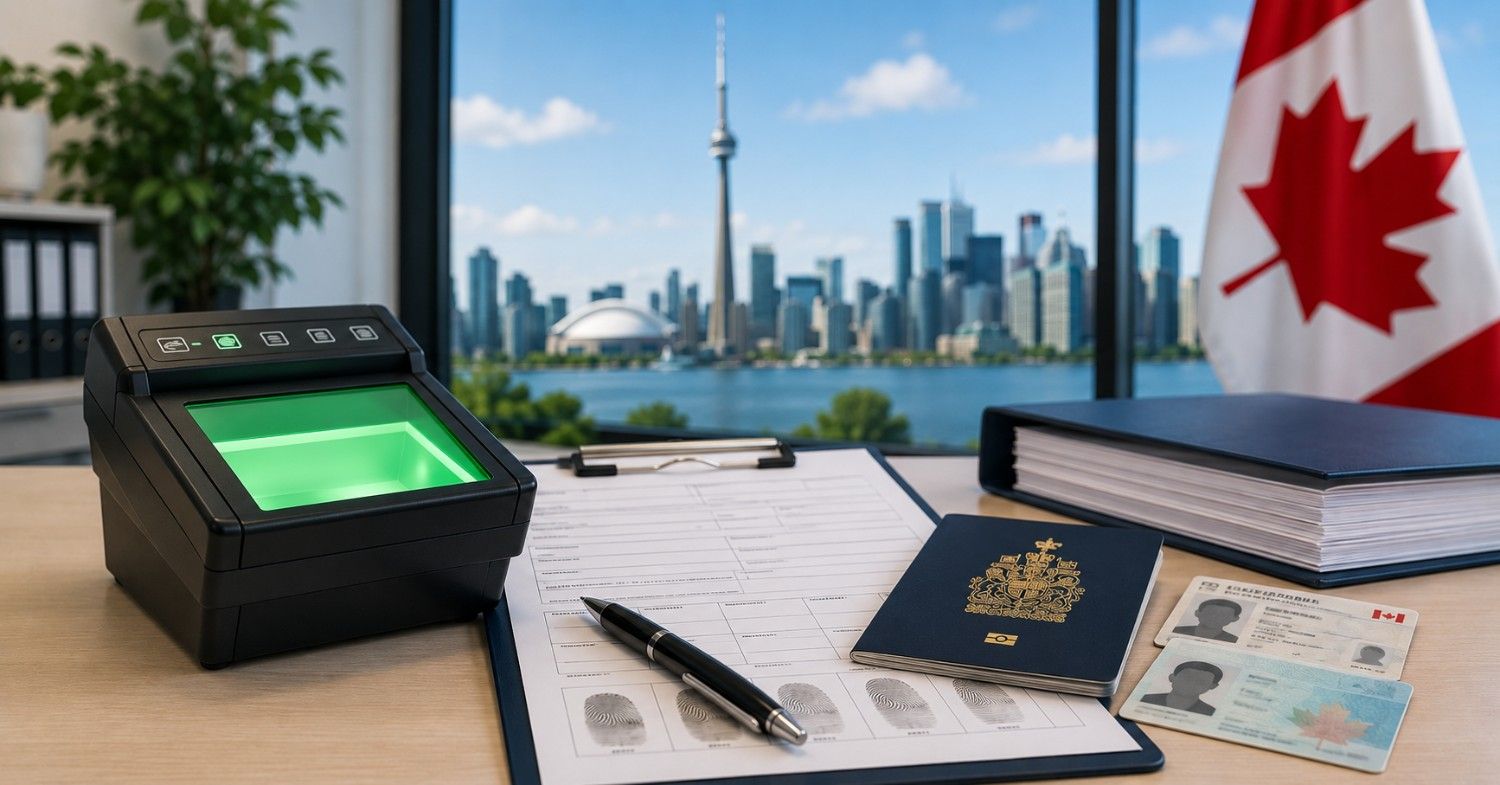
For many Canadians, travelling to the United States is part of everyday life, whether for business, vacations, family visits, shopping, or medical appointments. However, if you have a criminal record or certain immigration violations, you may be denied entry at the U.S. border.
If you have been found inadmissible to the United States, you may need a U.S. Entry Waiver (Form I-192) before travelling.
At F.I.P.S. (Fingerprints, Identifications and Pardons Services), we provide RCMP-accredited digital fingerprinting and identity verification services to help individuals prepare the documentation required for their U.S. Entry Waiver applications.
This guide explains who needs a U.S. Entry Waiver, how the application process works, and how F.I.P.S. can help.
What Is a U.S. Entry Waiver?
A U.S. Entry Waiver is official permission granted by U.S. authorities that allows certain inadmissible foreign nationals, including eligible Canadians, to enter the United States temporarily for non-immigrant purposes. Canadians who are visa-exempt generally apply using Form I-192 (Application for Advance Permission to Enter as a Non-immigrant).
A waiver does not erase a criminal record or remove inadmissibility. Instead, it gives permission to enter the United States for a specific period despite the underlying issue.
Who Needs a U.S. Entry Waiver?
You may require a U.S. Entry Waiver if you have been found inadmissible because of:
- Criminal convictions
- Certain drug-related offences
- Previous denial of entry to the United States
- Immigration violations
- Previous deportation or removal (additional forms may also be required in some cases)
- Other grounds of inadmissibility under U.S. immigration law
If you are unsure whether you are admissible, it is advisable to seek legal guidance before making travel plans.
Does a Canadian Record Suspension Allow You to Enter the United States?
No.
Many Canadians believe that receiving a Canadian Record Suspension (formerly called a Pardon) automatically restores their ability to enter the United States.
This is not the case.
U.S. Customs and Border Protection (CBP) does not automatically recognize Canadian Record Suspensions when determining admissibility. Depending on your circumstances, you may still require a U.S. Entry Waiver.
Common Reasons Canadians Apply for a U.S. Entry Waiver
Individuals commonly apply for a waiver when travelling for:
- Business meetings
- Family visits
- Vacations
- Medical treatment
- Sporting events
- Conferences
- Cross-border employment
- Shopping and personal travel
How Does the U.S. Entry Waiver Process Work?
Although every case is different, the process generally includes the following steps.
Step 1: Determine Eligibility
Confirm that a waiver is appropriate for your situation and identify the documentation required for your application.
Step 2: Complete Form I-192
Eligible Canadian applicants generally submit Form I-192, which requests advance permission to enter the United States as a non-immigrant.
Step 3: Gather Supporting Documents
Supporting documents may include:
- Court records
- Police documents
- Government-issued identification
- Proof of Canadian citizenship
- Personal statement
- Supporting evidence demonstrating rehabilitation or the purpose of travel
The exact documentation varies depending on the circumstances of your case.
Step 4: Complete Fingerprinting
Applicants need certified RMCP fingerprints and perhaps police clearances from other countries as part of the application package.
F.I.P.S. provides RCMP-accredited digital fingerprinting to help applicants meet these requirements accurately.
Step 5: Submit the Application
Eligible Canadian applicants typically submit their application package through designated U.S. Customs and Border Protection (CBP) locations or pre-clearance offices, after which it is reviewed by the Admissibility Review Office (ARO).
How Long Does a U.S. Entry Waiver Take?
Processing times vary depending on:
- Case complexity
- Application completeness
- Government processing volumes
- Individual circumstances
Because processing can take several months, applicants should begin the process well before their intended travel date.
How Long Is a U.S. Entry Waiver Valid?
If approved, a waiver may be issued for different validity periods depending on your circumstances and the decision of U.S. authorities.
Many waivers are granted for one, two, or five years, after which a new application may be required if you wish to continue travelling to the United States.
Why Is Fingerprinting Important?
Fingerprinting helps verify your identity and supports the criminal record documentation required for many waiver applications.
Digital fingerprinting offers:
- Accurate identity verification
- Secure electronic submission
- Faster processing
- Reduced risk of rejected fingerprints
Using an RCMP-accredited fingerprinting agency helps ensure your fingerprints meet required quality standards.
Why Choose F.I.P.S.?
F.I.P.S. has more than 30 years of experience providing fingerprinting and identity verification services.
While legal advice regarding waiver eligibility should come from a qualified immigration lawyer when appropriate, F.I.P.S. helps applicants by providing the fingerprinting and identification services needed to support their application.
Our Services Include
- RCMP Digital Fingerprinting
- Certified Criminal Record Checks
- Identity Verification
- Fingerprinting for U.S. Entry Waivers
- Immigration Fingerprinting
- Record Suspension Fingerprinting
Why Clients Choose F.I.P.S.
- RCMP-Accredited Fingerprinting Agency
- Over 30 Years of Experience
- Secure Digital Submission
- Professional and Experienced Staff
- Walk-In Service Available
- Convenient GTA Locations
We proudly serve clients throughout Toronto, Brampton, Mississauga, North York, Scarborough, Vaughan, Markham, Richmond Hill, and the Greater Toronto Area.
Frequently Asked Questions (FAQ)
A U.S. Entry Waiver allows certain individuals who are inadmissible to the United States to enter temporarily after receiving approval from U.S. authorities.
Individuals with certain criminal convictions, immigration violations, or previous U.S. entry issues may require a waiver before travelling.
Eligible visa-exempt Canadians generally apply for a U.S. Entry Waiver using Form I-192.
No. A Canadian Record Suspension does not automatically remove U.S. inadmissibility.
Processing times vary depending on the application and government processing volumes. Applying several months before travel is recommended.
Many applicants require fingerprinting and certified criminal record documentation as part of the application process.
Approved waivers may be valid for one, two, or five years, depending on the decision made by U.S. authorities.
Being denied entry to the United States does not necessarily mean you can never travel there again lawfully. For many Canadians, a U.S. Entry Waiver provides a legal pathway to temporary entry for business, family visits, vacations, and other non-immigrant purposes.
If you require RCMP-accredited fingerprinting or certified criminal record documentation for your application, F.I.P.S. offers professional, secure, and efficient services to help you prepare your supporting documents with confidence.