
What Is RCMP Cardscan and How Does It Work?
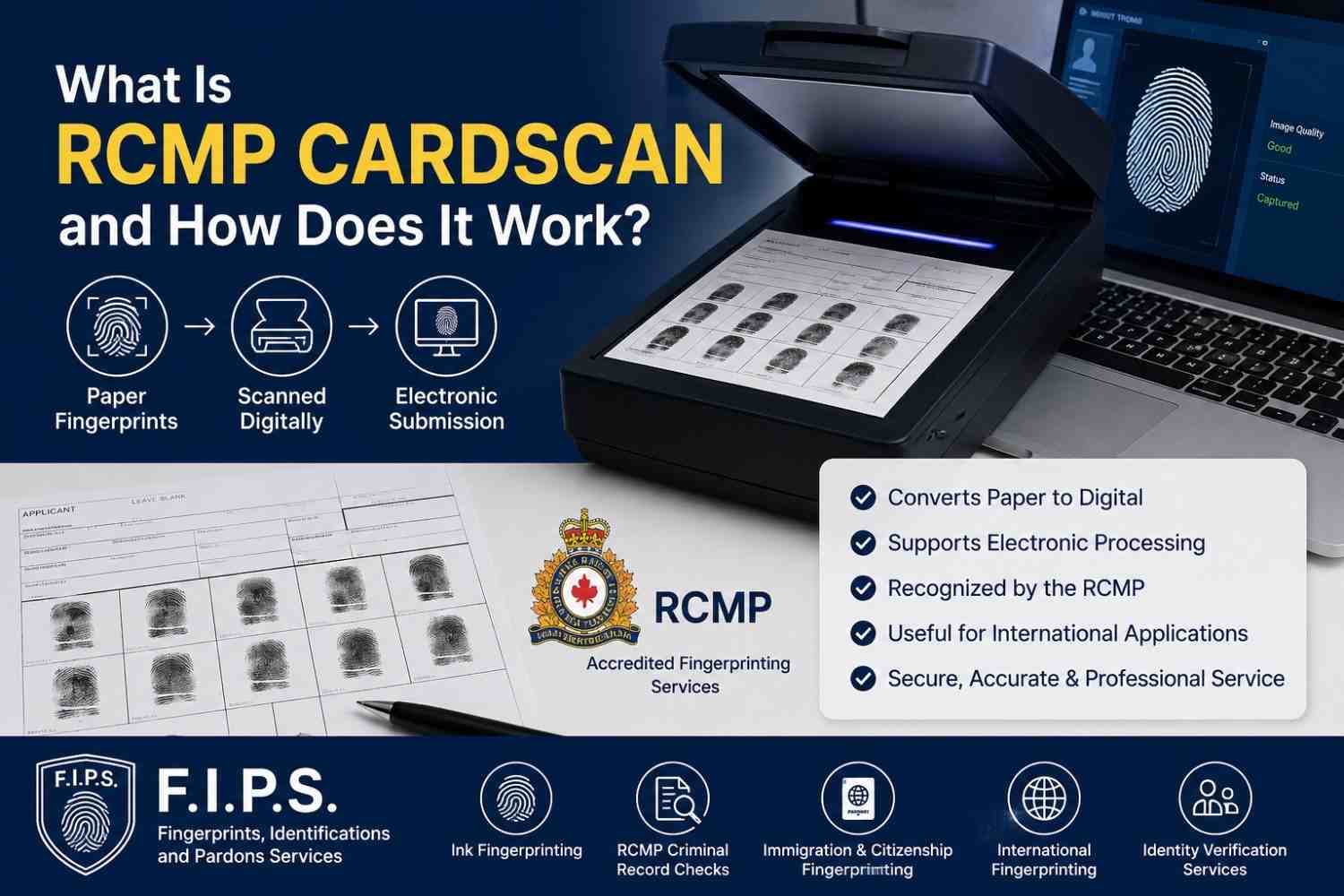
Fingerprinting is an important part of identity verification for criminal record checks, immigration, citizenship, employment, professional licensing, international travel, and other official applications. While most people are familiar with digital fingerprinting, fewer understand RCMP Cardscan and how it works.
RCMP Cardscan is an electronic fingerprint capture method that converts fingerprints already recorded on a paper fingerprint card into digital images. According to the Royal Canadian Mounted Police (RCMP), Cardscan systems use a flatbed scanner to capture previously inked fingerprint or palm-print impressions from a fingerprint card.
At F.I.P.S. (Fingerprints, Identifications and Pardons Services), we provide professional fingerprinting and identity verification services for individuals who need Canadian or international fingerprint documentation.
What Is RCMP Cardscan?
RCMP Cardscan is a technology used to electronically capture fingerprint impressions from an existing paper fingerprint card.
Unlike Livescan fingerprinting, where fingerprints are captured directly from your fingers using an electronic scanner, Cardscan starts with fingerprints that have already been taken on a physical fingerprint card.
The scanner captures the fingerprint impressions and converts them into electronic biometric images that can be processed for an eligible electronic fingerprint transaction.
This technology can be particularly useful for applications where an organization requires fingerprints to be taken on a specific paper card but also requires electronic processing.
How Does RCMP Cardscan Work?
The Cardscan process generally involves several stages.
- Fingerprints Are Taken on a Card
First, fingerprints are captured using traditional ink-and-paper fingerprinting or another accepted method. The fingerprint impressions are placed on the required fingerprint card.
The card may also contain personal information such as your name, date of birth, and other identification details.
- The Fingerprint Card Is Scanned
The completed fingerprint card is placed on a Cardscan-compatible flatbed scanner.
The scanner captures the fingerprint impressions from the card and converts them into digital images.
- Fingerprint Information Is Prepared
The digital fingerprint images and biographical information are prepared according to the requirements of the receiving authority.
This step is important because fingerprint submissions must meet specific technical and identification requirements.
- Electronic Submission
Where the application qualifies for electronic submission, an accredited fingerprinting provider can submit the fingerprint transaction through the appropriate system.
The RCMP’s Canadian Criminal Real Time Identification Services (CCRTIS) processes eligible civil fingerprint transactions and compares fingerprints against the National Repository of Criminal Records.
Cardscan vs. Livescan Fingerprinting
Cardscan and Livescan are both electronic fingerprint capture technologies, but they work differently.
Cardscan scans fingerprints that have already been recorded on a paper fingerprint card.
Livescan captures fingerprints directly from the person’s fingers using an electronic fingerprint scanner.
The RCMP recognizes both Livescan and Cardscan as electronic fingerprint capture device systems for civil fingerprint transactions.
In simple terms:
Ink fingerprinting: Creates the physical fingerprint card.
Cardscan: Digitally scans the completed fingerprint card.
Livescan: Captures fingerprints directly in digital format.
The appropriate method depends on the requirements of the organization requesting your fingerprints.
When Is Cardscan Fingerprinting Required?
Cardscan may be useful when an applicant already has fingerprints recorded on a paper fingerprint card and those fingerprints need to be converted into digital format.
Possible situations include:
- International visa applications
- Foreign employment applications
- Immigration documentation
- FBI fingerprint card requirements
- International background checks
- Applications requiring ink fingerprints
- Other government or legal applications that specifically require fingerprint cards
Not every application can use Cardscan. Some organizations require original ink fingerprint cards, while others require direct digital fingerprint capture. Always follow the instructions provided by the requesting authority.
Is Cardscan the Same as an RCMP Criminal Record Check?
No.
This is an important distinction.
Cardscan is a fingerprint capture technology.
An RCMP Certified Criminal Record Check is a fingerprint-based criminal record verification service.
In an eligible electronic process, the fingerprint information may be captured through Cardscan or Livescan and submitted for RCMP processing. The RCMP then processes the fingerprint transaction to determine whether a criminal record exists and provides the appropriate result according to the application requirements.
Therefore, Cardscan itself does not mean that you have received a criminal record check.
Why Is Fingerprint Quality Important?
Fingerprint quality is extremely important because fingerprint images must contain sufficient detail for accurate identification.
Poor fingerprint impressions can result from:
- Excessive or insufficient ink
- Smudging
- Incomplete impressions
- Incorrect finger placement
- Damaged fingerprint cards
- Poor-quality scanning
Using an experienced fingerprint technician and appropriate equipment can help reduce the possibility of fingerprint quality problems.
What Are the Benefits of Cardscan?
Cardscan can provide several advantages when it is appropriate for an application:
Converts Paper to Digital
Existing ink fingerprint cards can be converted into electronic fingerprint images.
Supports Electronic Processing
Where permitted, digital fingerprint information can be submitted electronically instead of relying entirely on physical mail.
Maintains Existing Fingerprints
Applicants who have already completed ink fingerprinting may not need to repeat the fingerprint capture simply to create a digital record, depending on the receiving authority’s requirements.
Useful for International Applications
Some international authorities continue to require fingerprint cards, making Cardscan useful when electronic conversion is permitted.
Why Choose F.I.P.S.?
F.I.P.S. provides professional fingerprinting and identification services for individuals throughout Toronto and the Greater Toronto Area.
Our services include:
- RCMP Digital Fingerprinting
- Cardscan Fingerprinting
- Ink Fingerprinting
- RCMP Certified Criminal Record Checks
- Immigration Fingerprinting
- Citizenship Fingerprinting
- Record Suspension Fingerprinting
- U.S. Entry Waiver Fingerprinting
- International Fingerprinting
- Identity Verification Services
Our experienced team can help you understand the fingerprinting method required for your particular application and ensure the process is completed accurately.
Frequently Asked Questions (FAQ)
RCMP Cardscan is a fingerprint capture technology that uses a flatbed scanner to electronically capture previously inked fingerprints from a paper fingerprint card.
Cardscan scans fingerprints from an existing paper card, while Livescan captures fingerprints directly from your fingers using an electronic scanner.
Yes. Cardscan is designed to capture fingerprint impressions that have already been recorded on a fingerprint card.
Eligible electronic civil fingerprint transactions can be submitted to the RCMP through accredited fingerprinting companies when the application meets the applicable requirements.
Cardscan is one form of electronic fingerprint capture. It converts existing paper fingerprint impressions into digital images, whereas Livescan captures fingerprints directly in digital format.
It may be used when the receiving organization accepts scanned fingerprint cards or electronic fingerprint submissions. Requirements vary, so applicants should follow the instructions of the organization requesting their fingerprints.
F.I.P.S. provides fingerprinting and identification services, including Cardscan-related services. The appropriate fingerprinting method depends on the requirements of your application.
RCMP Cardscan provides an important connection between traditional ink fingerprinting and electronic fingerprint processing. By scanning existing fingerprint cards, Cardscan can convert physical fingerprint impressions into digital biometric information for eligible applications.
Understanding the difference between Cardscan, Livescan, and traditional ink fingerprinting can help you choose the right service and avoid unnecessary delays.
If you need RCMP Cardscan fingerprinting, ink fingerprinting, digital fingerprinting, or an RCMP Certified Criminal Record Check, F.I.P.S. can help you understand the requirements and complete your fingerprinting process professionally and securely.